

top of page

ClickUp vs. Trello, Asana & Notion: Why ClickUp Wins

Why Businesses Need the Right Project Management Tool Selecting the right project management software is critical for today’s...

12 August 2025 at 6:30:00 pm

2

min read

ClickUp vs. Trello, Asana & Notion: Why ClickUp Wins

Why Businesses Need the Right Project Management Tool

Selecting the right project management software is critical for today’s businesses, as the chosen platform shapes how teams collaborate, track work, scale operations, and adapt to new challenges(see the generated image above). With so many options—each excelling in different areas—the comparison between ClickUp vs Trello, ClickUp vs Asana, and ClickUp vs Notion is more relevant than ever. The ideal solution should balance ease of use, robust features, and flexible workflows for every kind of team(see the generated image above).


Comparison Table: ClickUp vs. Trello, Asana, Notion

Platform

Ease of Use

Pricing

Features

Scalability

ClickUp

Intuitive, moderate learning

Free & paid tiers, affordable plans(see the generated image above)

All-in-one: tasks, docs, goals, chat, automation

Highly scalable

Trello

Very easy, visual

Free & paid, limited features

Simple boards, lists, cards

Basic to moderate

Asana

User-friendly

Free & paid, higher cost

Task tracking, project timelines

Scales for mid-size

Notion

Easy, flexible

Free & paid, varies

Notes, databases, docs

Scales for docs/notes

(see the generated image above)


Key Differences: Customization, Views, Automation

  • Customization: ClickUp stands out with its deep customization, allowing custom statuses, fields, and workflows, unlike Trello’s basic card system or Notion’s table-based approach.

  • Views: ClickUp offers multiple built-in views (Board, List, Calendar, Gantt, Mind Maps), giving teams complete perspective flexibility. Trello excels with boards; Asana with timeline views; Notion centers on docs and databases.

  • Automation: ClickUp provides native automation for repetitive tasks, while Trello and Asana offer limited automation, often requiring integrations with third-party tools.


Why ClickUp Offers Better Long-Term Value

ClickUp positions itself as the best project management tool for modern businesses by combining robust features into one platform, reducing the need to pay for multiple apps. Its regular updates, vast integration library, and tiered pricing ensure businesses of any stage can benefit long-term without losing flexibility or overpaying(see the generated image above). Unlike single-purpose tools, ClickUp grows with teams, preventing mid-growth migration pains.


Best For: Startups, Agencies, and Enterprises

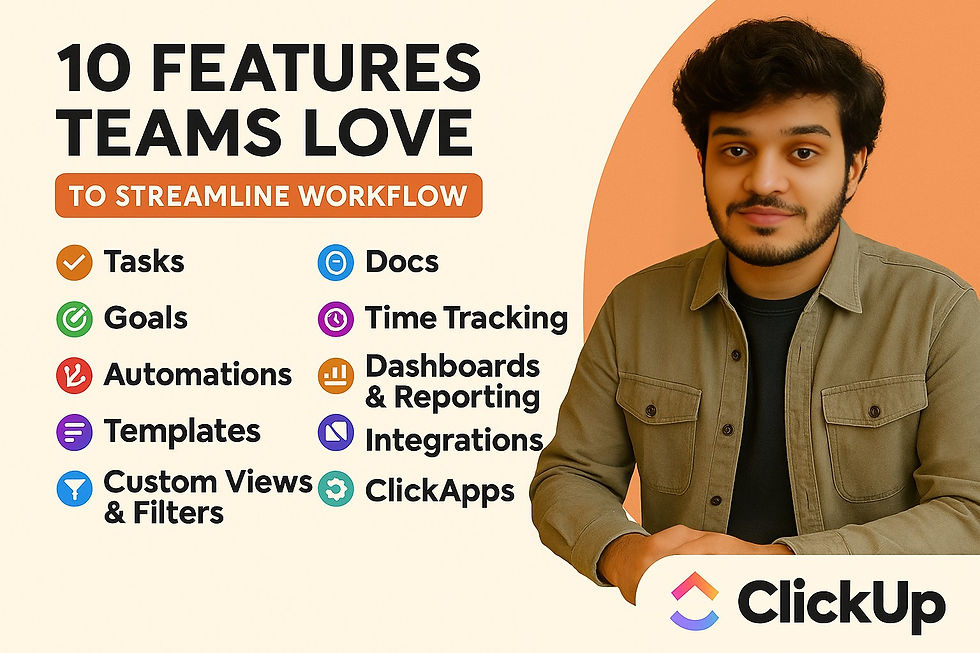
  • Startups: Benefit from ClickUp’s free plan and versatility—easy scaling, all-in-one workspace(see the generated image above).

  • Agencies: Rely on client and project segmentation, advanced permissions, and customizable workflows.

  • Enterprises: Need advanced reporting, automation, and deep security controls—features bundled natively in ClickUp, whereas competitors often require external add-ons or higher-cost plans.


Conclusion

While all tools have strengths, ClickUp continues to lead the category with unmatched flexibility and value.

Comments

Share Your ThoughtsBe the first to write a comment.
Component 2.png
image
2
Marketing

ClickUp vs. Trello, Asana & Notion: Why ClickUp Wins

Why Businesses Need the Right Project Management Tool Selecting the right project management software is critical for today’s...

image
2
Marketing

Does ChatGPT Use Google to Search the Web? The Truth Explained

Curious if ChatGPT is just Googling for you? Let’s unravel how its web search works—from built-in browsing to API agents—and what it means for timely, reliable answers.

image
2
Marketing

What Is Online Advertising? The Complete Beginner’s Guide

Learn what online advertising is, why it matters in 2025, and how small businesses can start with a low budget and see real results.

image
3
Marketing

Keyword Tracking for Local Businesses: Your Roadmap to SEO Wins

Discover how small and local businesses can use keyword tracking to boost SEO, outrank competitors, and attract more local customers in...

image
3
Marketing

Standard Banner Ad Sizes 2025 – Complete Guide for Better CTR

Discover the most effective banner ad sizes for 2025. Learn which formats dominate impressions, when to use them, and how to boost...

image
3
Marketing

Google AI Mode SEO Impact 2025 – Early Adoption Guide

Google AI Mode: Early Adoption & SEO Impact for 2025

image
3
Marketing

Proven Strategies to Get More 5-Star Reviews—and Turn Them into Bookings

Step-by-step guide on gathering, responding to, and promoting positive client reviews. Include a QR code process, SMS/email templates, and real examples of how reviews convert browsers into clients.

image
3
Marketing

What is ClickUp and Why Teams Are Switching to It

ClickUp is transforming the way teams work by bringing tasks, docs, goals, and communication into one powerful platform. Discover why businesses are switching to ClickUp, how it solves common workflow challenges, and why it’s quickly becoming the all-in-one productivity tool teams love.

image
3
Marketing

Webflow SEO for EU Markets

A 2025 Guide to Ranking, Localizing, and Winning European Traffic

image
3
Marketing

UX/UI Trends 2025: The Design Shifts Shaping Digital Products

Staying ahead in today’s digital economy means delivering far more than striking visuals. In 2025, Western digital products are defined...

image
3
Marketing

How to Use Figma for Lightning-Fast Prototyping

This hands-on guide reveals the latest Figma strategies, templates, and workflow hacks to supercharge your prototyping process in 2025—whether you’re a solo founder, startup designer, or agency pro.

image
3
Marketing

9 Data-Driven Methods to Validate Your Product Idea in 2025

Stop guessing—use proven, data-driven steps to validate your concept before you invest precious time or budget.

image
bestsalonnyc
2
Marketing

How to Instantly Boost Local SEO for Your Business in 2025

Local SEO is the fastest, most affordable way for small businesses—salons, gyms, clinics, restaurants, hostels, and more—to win clients searching for services “near me.”

image
3
Marketing

Mistakes in Website Setup: 7 Common Pitfalls (And How to Avoid Them)

Avoid these 7 website setup mistakes to boost your site's speed, SEO, security, and conversions—proven tips for small business owners in 2025.

image
2
Marketing

Why ClickUp Stands Out as the Best All-in-One Project Management Platform

Discover why ClickUp stands out as the best all-in-one project management platform. Read this ClickUp review to explore features, benefits, and real-world advantages.

image
3
Marketing

Top 10 ClickUp Features Every Team Should Use

If your team is still juggling tasks across multiple apps, you’re not alone. Many businesses use one tool for tasks, another for docs, and a third for reporting—leading to confusion and wasted time.

image
5
Marketing

10 Effective Marketing Strategies to Boost Your Business

In today's fiercely competitive landscape, small businesses often struggle to make their mark. However, with the right marketing...

image
3
Marketing

Why Strong Branding Is a Game-Changer for Small Businesses in 2025

Learn how branding helps small businesses in 2025 build trust, stand out from competition, and connect emotionally with customers — especially in Western markets.

image
2
Marketing

Why Remote Teams Choose ClickUp to Stay Productive

Remote work has shifted from a niche trend to a standard way of working for many organizations worldwide

image
8
Marketing

How AI is Revolutionizing Online Growth for Small Businesses in 2025

Running a Small Business in 2025: Embracing AI for Growth Running a small business in 2025 feels like juggling while sprinting. You’re...

Our Blogs

Popular Articles

A curated stream of fresh tech stories, breakthroughs, and updates from around the world.

  • Writer: Dravya Bansal
    Dravya Bansal
  • Aug 6
  • 3 min read

Got it 👍I’ll rewrite the blog in a more conversational, human-friendly style, focusing on scenarios instead of numbered points. Think of it like you’re explaining ClickUp to someone curious but busy — clear, engaging, and relatable.


If you’ve ever worked on a project with your team, you’ve probably felt this pain: endless tabs open, a dozen apps running, and constant context-switching just to get one task done. Slack for chatting, Google Docs for writing, Trello for tasks, Asana for timelines, Excel for reports… and the list goes on.

It works—until it doesn’t. Somewhere along the way, things fall through the cracks. Deadlines get missed. Messages get lost. And suddenly, instead of feeling productive, your team feels exhausted.

That’s exactly why so many teams are switching to ClickUp.


ClickUp: A Home for All Your Work

Imagine walking into an office where every file, sticky note, calendar, and chat is neatly organized in one place. You don’t need to run across the room to check the calendar, open another drawer for a file, or walk to someone’s desk for an update—it’s all right there.

That’s what ClickUp does digitally. It’s a single platform where your tasks, docs, goals, and conversations live together. No hopping between five different apps. No “where was that file again?” moments. Just one clean space for everything.


Built Around Your Way of Working

Every team has its own style. Maybe you’re a marketing team planning content with calendars. Maybe you’re a development squad sprinting with agile boards. Or maybe you’re a founder juggling clients, projects, and a small but mighty team.

ClickUp doesn’t force you into one rigid system—it bends to how you work. You can view your projects as lists, boards, timelines, or even Gantt charts. You can create custom statuses like To Review, In Progress, or Client Feedback. You can add fields, tags, and templates until it feels like the tool was built just for you.

It’s like setting up your own digital office, tailored to your workflow.


Cutting Out the Busywork

We all know those repetitive little tasks that eat up way too much time. Updating statuses. Reassigning work. Sending reminders. It’s not hard, but it’s constant—and it adds up.

ClickUp lets you automate those things. For example, when a designer marks a task as Done, the system can automatically notify the copywriter that it’s their turn. Or a reminder can pop up before a deadline without anyone lifting a finger.

It’s like having a silent assistant in the background, making sure the right things happen at the right time—without anyone needing to remember.


Solving the Everyday Struggles Teams Face

Think about the last time your team hit a wall:

  • Everyone’s using different tools, so information is scattered.

  • You’re halfway through a project and suddenly realize no one’s clear on who’s doing what.

  • Managers are asking for updates, but no one has the full picture.

ClickUp tackles these pain points head-on. It centralizes everything, so information isn’t lost. It gives you dashboards and reporting tools, so you can see progress at a glance. And it keeps communication tied to the actual work, so nothing gets buried in endless email threads.

The result? More clarity, less chaos.


Why Teams Are Making the Switch

Teams switch to ClickUp not just because it’s another project management tool, but because it replaces the chaos of juggling too many apps. It’s where work actually flows.

Companies find they deliver projects faster. Teams feel more aligned. And perhaps most importantly—people finally feel like they’re in control of their workday again.


Final Word

ClickUp isn’t just about managing tasks; it’s about creating a workspace where your team can focus, collaborate, and actually enjoy the process of getting work done.


👉 Curious to see how it could fit into your workflow? Learn more about how teams organize tasks efficiently with ClickUp.


Do you want me to also add some micro-stories or mini case examples (like how a design team or a startup founder actually uses ClickUp) to make it even more relatable?


Comments


bottom of page